
The Difference Your Skin Can Feel
Every year, more is written about sunscreens - but the key topic is the difference between mineral and chemical sun filters. Which works better? And which is safer for your skin?
Chemical Sunscreen
Chemical sunscreens contain synthetic filters that absorb UV radiation and convert it into heat. Sounds harmless, but there are drawbacks:
- Needs 20 minutes before it starts working
- Can cause skin irritation, especially on sensitive skin
- Some filters are hormone-disrupting
- Often contains microplastics that are harmful to the environment
- Can trigger allergic reactions
Mineral Sunscreen
Mineral sunscreens work as a physical shield. They contain zinc oxide and/or titanium dioxide - mineral particles that sit on the skin and directly reflect UV radiation.
The benefits:
- Works immediately after application
- Gentle on sensitive skin, eczema, and allergies
- No hormone-disrupting effects
- Ocean-friendly - no toxic substances for marine life
- Suitable for all skin types, including children
UVA and UVB - What's the Difference?
Sunlight contains two types of harmful radiation:
UVA radiation:
- Penetrates deep into the skin
- Present in all seasons, passes through glass
- Causes skin ageing, wrinkles, and pigmentation spots
- The damage becomes visible around the age of 40
UVB radiation:
- Stays at the surface
- Causes sunburn
- Stronger during summer months
Both are harmful - good protection covers both.
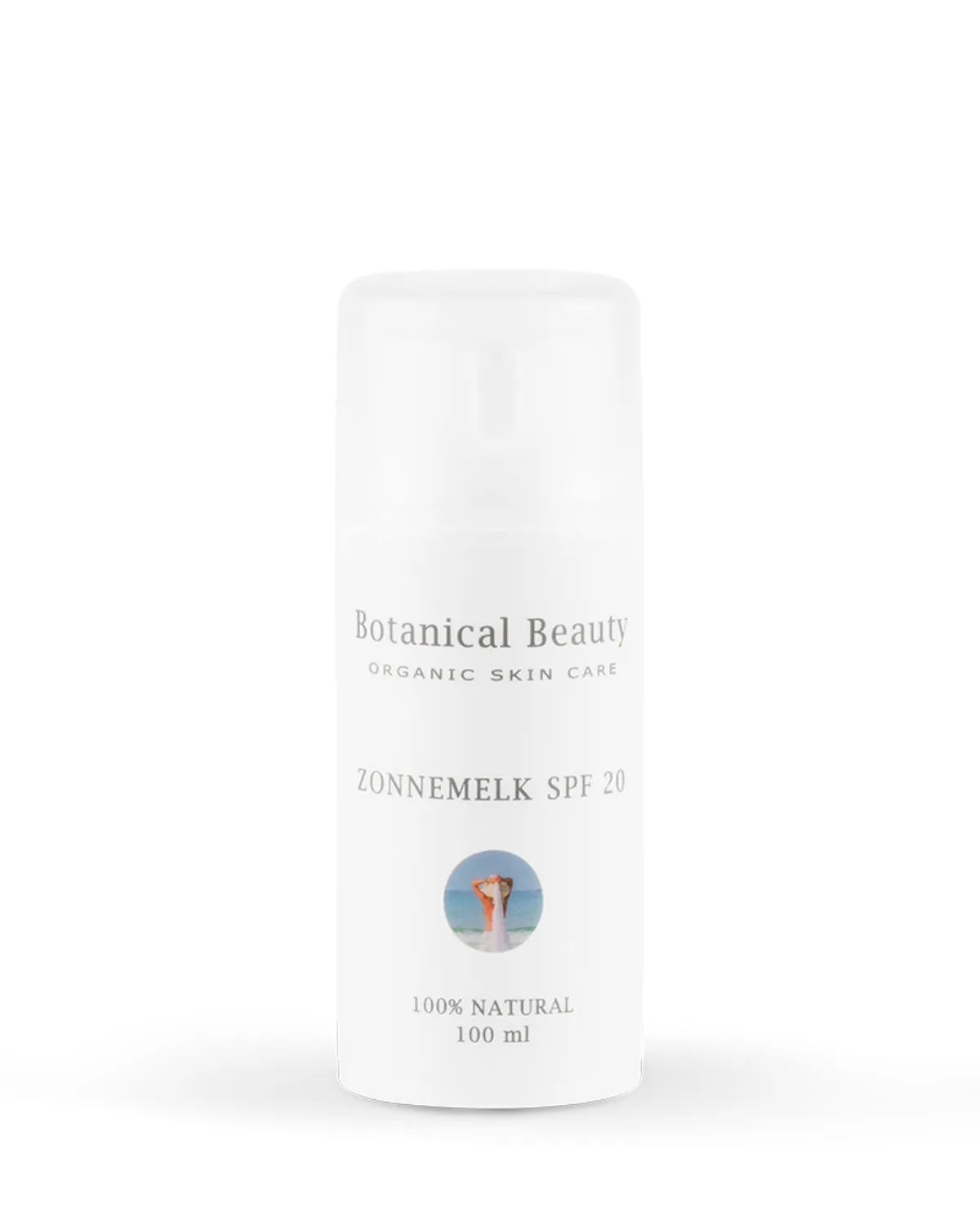
My Choice: Sun Milk SPF20
The mineral Sun Milk I use and sell is 100% pure and natural, waterproof, and leaves no white cast. Free from nanoparticles, microplastics, and synthetic filters. Protects against both UVA and UVB.
Tip: start UVA protection as early in life as possible. The sooner you start, the slower your skin ages.
My favourite Botanical Beauty products for natural sun protection: